Varanasi, Uttar Pradesh:
While the rest of India prepares to celebrate Holi with colours and water, the ancient city of Varanasi witnesses a far more unusual and deeply spiritual tradition — Mashan Holi, where devotees celebrate the festival of colours with the ashes of funeral pyres.
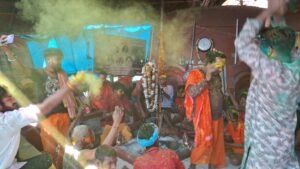
The centuries-old ritual took place once again in 2026 at the sacred cremation grounds of Manikarnika Ghat and Harishchandra Ghat, where sadhus, priests and devotees gathered to perform this rare and symbolic celebration. Amid the smoke of burning pyres and the chants of “Har Har Mahadev”, ascetics smeared ashes on their bodies and danced to the beat of drums, transforming the cremation ground into a unique space of devotion and philosophy.

A Ritual Rooted in Shiva Tradition
Mashan Holi is closely associated with the worship of Lord Shiva, who in Hindu mythology is believed to reside in cremation grounds and adorn himself with sacred ash. According to local beliefs in Kashi, after celebrating the divine wedding festival of Shiva and Goddess Parvati during Rangbhari Ekadashi, Lord Shiva visits the cremation grounds with his followers — ghosts, spirits and ascetics — to play Holi.
Devotees therefore reenact this mythical moment by playing Holi with ashes (bhasma) collected from funeral pyres. For many believers, the ritual symbolizes the ultimate truth of human existence — that all life eventually returns to ash.
History of the Unique Festival
Local historians believe the tradition has existed in Varanasi for several centuries and is deeply connected to the city’s spiritual identity. In the philosophy of Kashi, death is not seen as an end but as a passage to liberation or moksha. Because of this belief, cremation grounds in the city have long been considered sacred spaces rather than places of fear.
Mashan Holi thus reflects a powerful spiritual message: while Holi celebrates joy and renewal, the ashes remind devotees of the impermanence of life.
Mashan Holi 2026: Devotion Amid Tight Security
In 2026, hundreds of sadhus, local devotees and curious visitors gathered at the ghats to witness the rare celebration. Authorities deployed security personnel around the cremation sites to ensure that the festival did not disturb ongoing funeral rites.
Despite the security arrangements, the atmosphere remained deeply devotional. Sadhus danced in circles, applied ash to each other’s faces and sang traditional songs dedicated to Shiva. The rhythmic beats of damru and drums echoed across the banks of the Ganges, creating an atmosphere that was both eerie and spiritually intense.
A Growing Attraction for Visitors
In recent years, Mashan Holi has drawn increasing attention from photographers, travellers and cultural researchers from across India and abroad. Images of ash-covered ascetics celebrating Holi at the cremation grounds have become widely shared across social media, highlighting the unique spiritual traditions of Varanasi.
However, religious scholars and local authorities often remind visitors that the ritual is not merely a spectacle but a sacred practice rooted in centuries-old beliefs.
A Celebration Beyond Colours
Unlike the playful Holi seen in other parts of India, Mashan Holi carries a deeper philosophical message. In the city believed to grant salvation to the departed, the festival becomes a reminder of the fragile boundary between life and death.
As chants of “Har Har Mahadev” filled the air along the ghats of Varanasi in 2026, the ashes of the cremation ground turned into a symbol of spiritual liberation — making Mashan Holi one of the most mysterious and profound traditions of India’s cultural heritage.