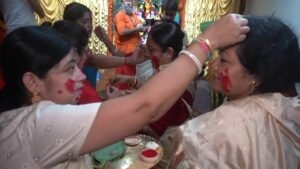
Kolkata, October 2025: As the echoes of Kali Puja fade, Bengal once again immerses itself in devotion — this time to Goddess Jagadhatri, the divine embodiment of wisdom, strength, and self-restraint. From Chandannagar’s dazzling streets to Kolkata’s age-old mansions, the festival lights up the state with faith and festivity.
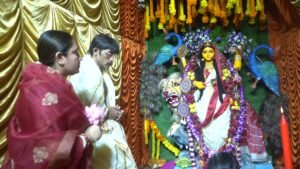

Dance Teacher Rinki Saha’s Home Becomes a Haven of Faith and Joy
In the heart of Kolkata’s cultural circle, renowned classical dancer Rinki Saha has once again opened her home to celebrate the divine grace of Jagadhatri Puja. For the past few years, the puja has been organized by her son, Ritwik Saha, transforming their residence into a vibrant center of tradition, art, and devotion.
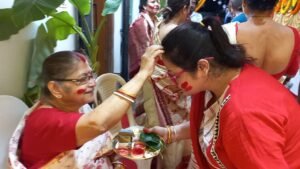
The courtyard glows with spiritual radiance — the goddess, draped in a red gorod saree, emanates divine serenity. The rhythmic beats of dhak, chants of the priest, and fragrance of incense fill the air. Guests, devotees, and family members together create an atmosphere of blissful reverence.
Rinki Saha and her husband, Dipankar Saha, welcomed visitors warmly, sharing moments of prayer, nostalgia, and cultural pride. Their home, once again, turned into a stage of devotion — where bhakti meets artistry.
From Navadwip to Chandannagar: The Historical Roots of Jagadhatri Worship
The origin of Jagaddhatri Puja traces back to 17th-century Navadwip, when it was introduced by Sarvabhauma Bhattacharya, a disciple of Sri Chaitanya Mahaprabhu. Later, the French-influenced zamindar families of Chandannagar adopted the worship with grandeur, shaping it into a hallmark of Bengali culture.
Goddess Jagaddhatri, regarded as a manifestation of Durga, is depicted with four arms holding a conch, discus, bow, and arrow. She rides a lion and subdues an elephant beneath her feet — symbolizing the victory of wisdom over ego.
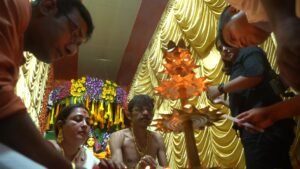

Chandannagar: The City of Lights and Devotion
Today, Chandannagar’s Jagaddhatri Puja has become one of Bengal’s grandest spectacles — often called the “Festival of Lights.” Streets glitter with artistic light installations, while massive pandals house intricately crafted idols.
The city transforms into a sea of illumination, with crowds pouring in from across the state to witness the mesmerizing lighting art designed by local craftsmen — a legacy now recognized worldwide.
Legacy and Devotion: Kolkata’s Bonedi Bari Celebrations
In North Kolkata’s historic neighborhoods — Shobhabazar, Bagbazar, Baranagar, Behala and Salt Lake — several bonedi (aristocratic) families continue their barir pujo (household worship) with age-old rituals.
From the day after Kali Puja, artisans begin shaping the clay idols — adorned with white sarees and serene red hues, representing the calm yet powerful spirit of the goddess.
Over the four festive days — Saptami, Ashtami, Navami, and Dashami — the sound of conch shells, dhak, chandi path, and devotional songs fill the air. For these families, Jagaddhatri Puja is not about extravagance, but about faith, family, and continuity of heritage.
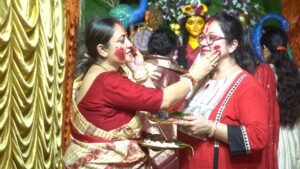

Kolkata’s Clubs Bring the Festival to the New Generation
Across Kolkata and its suburbs, community and club-based pujas have gained popularity in recent years. young enthusiasts organize Jagaddhatri Puja with creativity and devotion — often combining social welfare drives, cultural performances, and vibrant decorations.
These pujas reflect a new-age interpretation of tradition, keeping Bengal’s cultural pulse alive among the youth.

Faith, Femininity, and the Spirit of Bengal
Jagaddhatri Puja stands as more than a festival — it is a symbol of Bengal’s feminine divinity, cultural resilience, and collective pride.
The name “Jagaddhatri” literally means “the bearer of the world” — an embodiment of balance, knowledge, and strength. From Chandannagar’s illuminated lanes to the courtyards of Kolkata’s bonedi homes, the same message resonates —
“In devotion and light, Bengal finds its soul.”