In a dramatic turn of events, the execution of Indian nurse Nimisha Priya in Yemen has been postponed at the eleventh hour, bringing temporary relief to her family in Kerala. Scheduled to be hanged on July 16, the execution was unexpectedly stayed on the night of July 15. Just a day earlier, it seemed inevitable that the harsh sentence would be carried out. So what changed overnight?
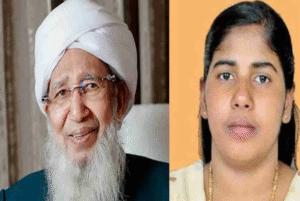

According to a leading national media report, it was not diplomacy or legal intervention that turned the tide, but the efforts of influential Muslim religious leaders from India and Yemen. Their timely mediation brought about a breakthrough that official channels could not achieve.
Religious Diplomacy Succeeds Where Diplomacy Failed
Nimisha Priya, a nurse from Kerala, went to Yemen in 2008 for work. While her husband and child returned to India amid the Yemeni civil war, she chose to stay. In an attempt to open her own clinic, she partnered with a local man, Talal Abdo Mahdi, since Yemeni law requires a local sponsor for foreign businesses.
However, the relationship turned abusive. Talal allegedly took her passport and subjected her to physical torture. In a desperate move to retrieve her passport, Nimisha began injecting him with sleeping medication. One day, an overdose led to his death. Panicked, she tried to dispose of the body by dismembering it and hiding it in a water tank. She was caught at the airport while attempting to flee and was sentenced to death under Yemen’s strict Sharia law in 2017.
Blood Money the Only Hope
Since then, the Indian government made several attempts through diplomatic channels to save her, all of which failed. Her family also filed mercy petitions, which were rejected multiple times by the Yemeni Supreme Court and even by President Rashad al-Alimi.
In Islam, the concept of “diyya” or blood money offers an alternative to capital punishment if the victim’s family agrees to accept financial compensation and grants forgiveness. Talal’s family initially demanded ₹8 crore (approximately 1 million USD). Supporters of Nimisha managed to raise the amount, but the execution order remained in place — until now.
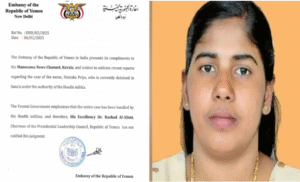

Grand Mufti’s Crucial Role in Postponement
The breakthrough came through Kerala’s renowned Islamic scholar and Grand Mufti, Kanthapuram A. P. Aboobacker Musliyar. At 94, Musliyar is a respected figure in the Sunni Muslim community and leads the influential Markaz organization in Kerala. Through his religious network, he initiated discussions with senior Islamic clerics in Yemen, who in turn approached Talal’s family.
For the first time in years, Talal’s brother agreed to talk. Legal activist Subhash Chandran from the “Nimisha Priya International Action Council” confirmed that the execution was halted after overnight discussions with the victim’s family.
This spiritual intervention was more effective than years of diplomatic pressure. The family is now hopeful that if the victim’s relatives accept the blood money and formally forgive Nimisha, her life could be spared.
No More Legal Options Left
Nimisha’s husband, Tomy Thomas, expressed cautious optimism:
“The stay is good news. We are happy but not relaxed. Efforts to bring her back safely to India will continue.”
All legal avenues have been exhausted. There will be no further court hearings. Nimisha’s fate now lies solely in the hands of Talal’s family. If they forgive her and accept the compensation, she may survive. Otherwise, the death sentence still looms large.
This case highlights the incredible power of faith and religious diplomacy in saving lives — even when all political and legal channels have failed.