

Rising living costs, soaring fuel prices and concerns over education and public services fuel unrest across France. Security tightened following incidents of violence and vandalism as President Emmanuel Macron’s government faces mounting political pressure.


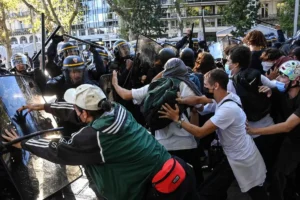
Paris, October 23: France is witnessing widespread protests over rising living costs, high fuel prices and concerns about deteriorating public services. What began as demonstrations linked to students’ grievances has gradually spread to several parts of the country. Following reports of violence, arson, vandalism and looting in multiple cities, authorities have tightened security measures. Amid the unrest, the Indian Embassy in Paris has issued an advisory urging Indian nationals living in France, as well as those planning to visit the country, to remain vigilant.
The embassy has advised Indian citizens to avoid protest sites, large gatherings and areas where tensions are high. Travellers have also been urged to follow instructions issued by local authorities and monitor the latest updates on public transport services. With further demonstrations expected in the coming days, Indians planning to travel to France have been advised to exercise particular caution.

Why Is France Witnessing Widespread Protests?
The current unrest in France stems from a combination of economic and social concerns. Rising prices of essential goods, increasing fuel costs and the growing financial burden on households have contributed to public frustration. Students, teachers and other sections of society have also raised concerns about infrastructure, staffing shortages and the quality of the education system.
Protests initially associated with demands for improvements in education have gradually evolved into a broader movement. Labour unions, student organisations and groups opposed to government policies have also joined the demonstrations. Supporters of France’s well-known Yellow Vest movement are among those associated with the wider wave of protests.
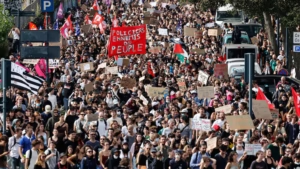
On October 17, large demonstrations took place across the country. According to figures cited by the authorities, approximately 550,000 people participated in protests that day, although organisers claimed the turnout was considerably higher. While many demonstrations began peacefully, clashes between sections of protesters and police were reported in several locations, escalating tensions.

Paris, Lyon, Marseille Among Cities Hit by Unrest
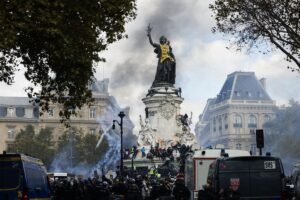
France’s capital, Paris, along with cities including Lyon, Marseille and Limoges, has witnessed incidents of violence and property damage. Reports have emerged of vandalism and looting at commercial establishments, as well as attacks on public buildings. A fire at the historic town hall in Limoges has further highlighted the seriousness of the situation. Lyon’s tourism office was also reportedly targeted in an arson incident.
In response, authorities have imposed curfews and restrictions on public gatherings in several areas to maintain law and order. Night-time movement has been restricted in certain parts of Paris, while officials in Marseille and Lyon have introduced strict measures to prevent further violence. Disruptions to public transport have also become a concern in some cities.
Media reports have placed the number of arrests linked to the unrest at more than 2,500. However, figures relating to arrests, convictions and injuries among security personnel have varied across reports and at different stages of the situation. French authorities are planning to deploy additional police personnel to maintain public order.

Political Challenge for Macron’s Government
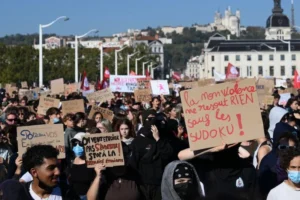
The unrest represents more than a law-and-order challenge for France. It has also emerged as a significant test for the country’s political leadership. President Emmanuel Macron’s government faces the dual challenge of addressing growing public frustration over economic pressures while restoring normalcy and preventing further violence.
Macron has accused far-left groups of playing a role in the violent incidents and vandalism. He has maintained that peaceful protest is a democratic right, but violence and the destruction of public property cannot be tolerated. Meanwhile, the protesters’ central concerns—including the cost of living, the quality of public services and problems within the education system—have become key issues in the political debate.
The government’s immediate challenge is to restore order while addressing the grievances that have fuelled public anger. Security measures alone may not provide a lasting solution unless broader economic and social concerns are also addressed.
Authorities are preparing for further demonstrations scheduled around October 24. Restrictions on unauthorised gatherings and plans for additional police deployment have been announced in several cities. However, it remains uncertain whether these measures will be enough to bring the protests to an end.

Indian Nationals in France Advised to Remain Vigilant
The Indian Embassy in Paris has advised Indian nationals and tourists to stay away from protest sites and crowded areas and to follow instructions issued by French authorities. Travellers have also been encouraged to check the latest information from airlines, rail services and local public transport operators before beginning their journeys.
Indian citizens requiring emergency assistance can contact the Embassy of India in Paris through the following channels:
Embassy of India in Paris
- Phone / Helpline: +33 6 48 34 00 63
- Email: cons.paris@mea.gov.in
Consulate General of India in Marseille (Alternative Contact)
- Phone / Helpline: +33 7 43 16 25 59
- Email: cgo.marseille@mea.gov.in
The emergency contact number for the Indian Consulate in Marseille is +33 7 43 16 25 59.
As the situation in France may change rapidly, Indian nationals are advised to follow official announcements from local authorities and the Indian Embassy for the latest safety instructions.

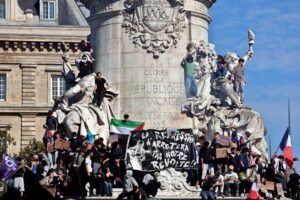
The ongoing unrest highlights how prolonged economic pressure and dissatisfaction with public services can develop into a wider political crisis. For the French government, the task is not simply to contain demonstrations and restore law and order, but also to rebuild public confidence.
The coming days will be crucial in determining whether the authorities can prevent further violence and address the underlying concerns driving the protests. The response of Macron’s government, along with the evolving demands of demonstrators, is likely to shape the next phase of France’s political and social situation.
– By AG
Photo Source: Social Media