

A Rebel Voice That United a Divided Land

By Screen N Stagez News Desk
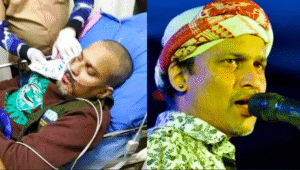
The skies over Assam have fallen eerily silent. The rolling rivers, the endless tea gardens, and the misty hills seem drenched in grief. For the voice that made Assam laugh, cry, and learn to protest is no more. On September 19, in Singapore, the cultural icon of Assam, Zubeen Garg, breathed his last. The moment the news reached home; the state was plunged into stunned silence.
From Guwahati to Jorhat, shutters came down across towns and cities. Streets filled with thousands of mourners. Some stood holding candles, others sang his songs through tears. A young woman whispered, “It feels like my childhood and youth have been taken away.” The people of Assam realized they had not just lost a singer, but a part of their very lives.


Zubeen Garg’s music was a language of unity. In a land scarred for decades by communal tensions and political violence, he became a symbol of togetherness. He sang in Assamese, but also in Hindi and Bengali, crossing cultural borders with ease. Even in times of political turmoil, he sang Bihu songs in Hindi, proving that music knows no barriers. Through his voice, he reminded people that love was Assam’s truest identity.
But Zubeen was never just an artist. He was a fearless voice of dissent. He stood firmly against the Citizenship Amendment Act (CAA), openly criticizing those in power. He defied threats from the militant group ULFA, continuing to sing in Hindi and Bengali on public stages. “I bow to no one out of fear,” he once declared from a stage, a line that gave courage to countless listeners.
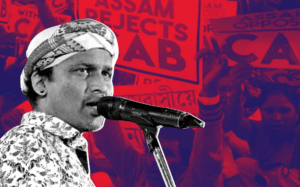

He was also a humanitarian in the truest sense. Along with his wife, he adopted 15 children. During the frightening days of COVID-19, he turned his own home into a care centre for patients. He rushed to help flood victims, campaigned against substance abuse, and raised his voice against animal sacrifice. To the common people, he was not just a star but someone whose door was always open in times of need.
Yet on the national stage, Zubeen was never given the recognition he deserved. Delhi and Mumbai-centric media often ignored his artistic brilliance and social contributions. Even in death, the absence of that acknowledgment remains striking. But for the people of Assam, there is no doubt—Zubeen was their soul’s true representative.
Some called him the “Bob Dylan of Assam,” others compared him to “Jim Morrison.” But in truth, he was simply Zubeen Garg—unique, incomparable, beyond any frame of reference. His songs, his protests, his compassion have seeped into Assam’s veins. Even in death, he lives on in the tears of his people, in the songs on their lips, and in their clenched fists raised in defiance.
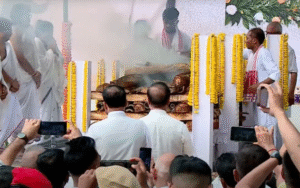

Assam is grieving, but within that grief lies pride. Pride that their son showed the world how art can transform society, how love can defeat hate. He may be gone, but his music, his vision, and his rebellion will live forever.