 East Bengal gallery transformed into a voice for millions
Kolkata, August 6:
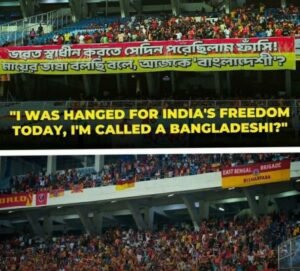
A powerful protest unfolded at Kolkata’s Salt Lake Stadium (Yuva Bharati Krirangan) during the Durand Cup clash between East Bengal and Namdhari FC, as East Bengal supporters used football as their canvas to voice a sharp political and cultural message: “I was hanged for India’s freedom, today I’m called a Bangladeshi?”
The bold message, displayed through a striking tifo (protest banner), reflected growing anger over recent controversial remarks dismissing Bengali as a language and associating it solely with Bangladesh. For East Bengal fans — many of whom trace their roots to families displaced by the Partition — the insult struck a historical and emotional chord.
The stadium echoed not just with football chants, but with the silent roar of resistance — against language-based discrimination and identity denial. This moment at YBK wasn’t just about the game; it was about asserting the dignity of the Bengali identity.
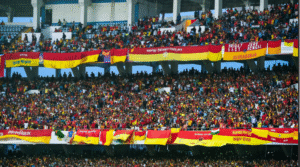
The protest gains deeper meaning considering the origins of East Bengal Club, historically supported by partition refugees from East Pakistan (now Bangladesh). For decades, the club has stood as a symbol of displaced people’s resilience and cultural pride.
The controversy flared up when a senior leader from the ruling party at the Centre reportedly stated that “Bengali is not a language”, triggering outrage across West Bengal. The Chief Minister has already responded strongly, vowing to lead a movement to defend the Bengali language.
As the debate rages, the football field has now become an unexpected — yet powerful — battleground for linguistic pride. The East Bengal gallery transformed into a voice for millions, as fans used their platform to highlight the pain of being labelled outsiders in their own land.
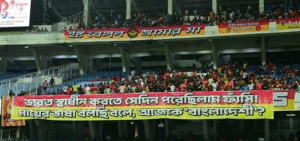
In a state where football and identity are deeply interwoven, Wednesday evening’s protest stood as a historic moment — not just for sport, but for socio-cultural expression.